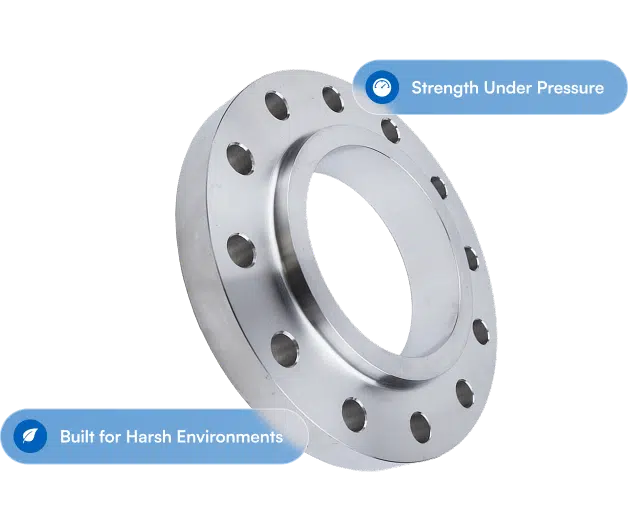
Blind Flanges
Texas Flange stocks Blind Flanges in carbon steel, stainless, and alloy across ASME B16.5 Class 150 through 2500, in raised face, flat face, and RTJ.
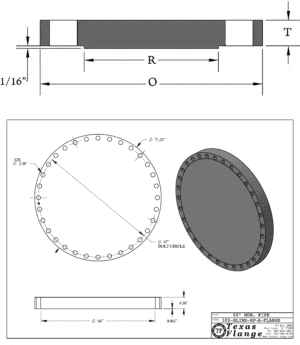
Dimensions and weights|CAD and 3D drawings
For pricing, send size, class, facing, and material to sales@texasflange.com or call 281-484-8325.
A blind flange is a solid steel piece with no bore (interior diameter) and primarily designed to cap off a line. As the majority of flange connections allow for the passing through of air or fluid via an interior opening, blinds give the ends of pipe connections a well-formed termination point or rerouting of the media in question towards another portion of the pipe assembly. Opt for a blind flange in these cases, as well as in instances when a pipe line requires a future modification, such as the installation of a valve or fitting to reroute flow.
The majority of blind flanges are of basic constitution, require minimal machining compared to other flanges, and weigh more than most options given the lack of a bore.
Although these are typically provided as blanks to match up to slip on and weld neck flanges, we offer them custom machined as well. Popular alterations include NPT threads in the center, as well as custom bore holes to function as slip on flanges without hubs.
Blind flanges can also be furnished with high hubs on higher pressure applications (most API 6BX blinds have high hubs as a requirement).
The three most popular forms of face connections for blind flanges are typically going to match the mating flange in question. These include raised face, flat face, and ring joint (RTJ) face seals. The first two are more common in basic sealing applications, with RTJ being the face of choice for higher pressure applications.
In specifications from decades past, including B16.1 and other industrial standard cast steel requirements, blind flanges would often contain a slight recess in the center portion of the raised face.
This recess allowed for the mating of the end of pipe into the connecting flange and allowing for a seal to form between this connecting flange and the blind.
The larger OD blind flanges opted for a concave recess through the body of the blind to create a dished head formation at the top of the flange.
As the older cast iron specification is relatively obsolete, most blind flanges will not be made in these styles. Instead, opt for a modern blind flange with or without a hub.
Blind flanges from stock in carbon steel, stainless and alloy, Class 150 through 2500, RF, FF and RTJ. Send size, class, facing and material to sales@texasflange.com or call 281-484-8325 for pricing and availability.
The Flanges You're Looking For
Texas Flange stocks a wide variety of flanges in all sizes and specifications.
ANSI Flanges
ASME Flanges
AWWA Flanges
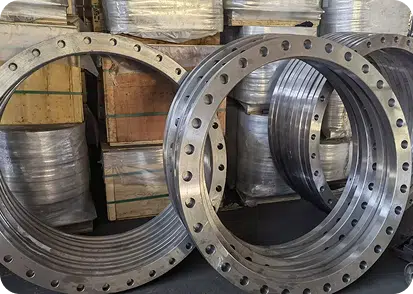
Pipe Flanges
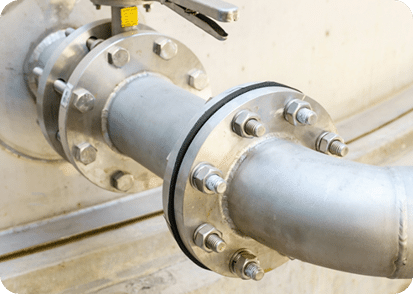
Industrial Flanges

Oil & Gas Industry Flanges
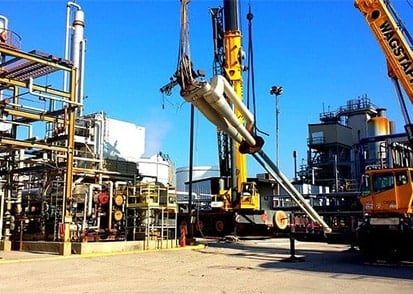
Custom Flanges
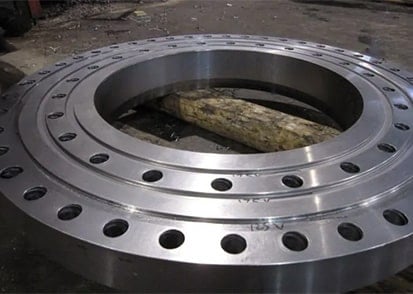
Petrochemical Flanges
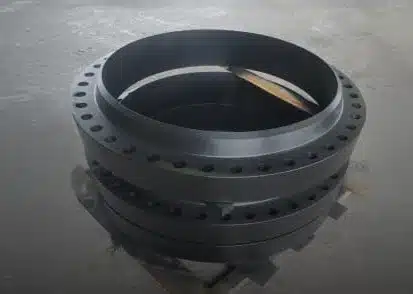
Texas Waterworks Flanges
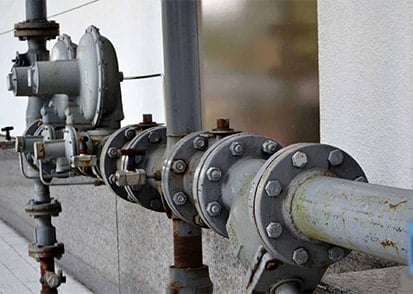
Ring Joint Flanges
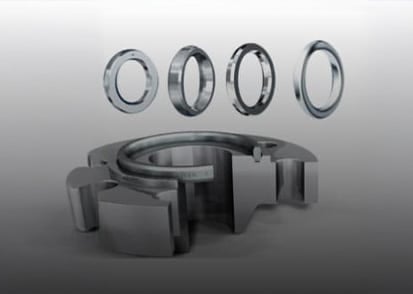
Large Industry Standard Flanges
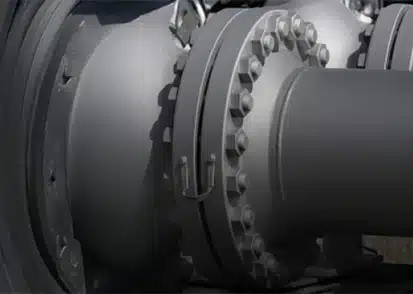
Metric System Flanges

Plumbing And Mechanical Industries Flanges
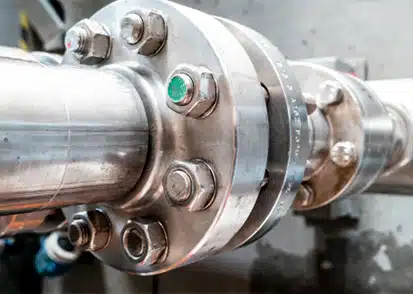
Industrial Pumps, Valves And Vessels
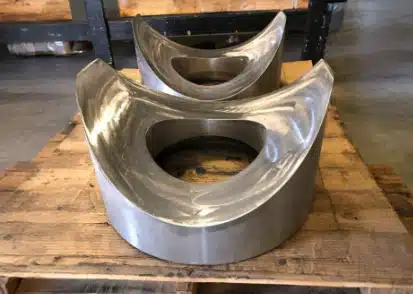
Manufacturing Industries Flanges

Heating Systems Industries Flanges

Flange Food And Beverage Industries Flanges
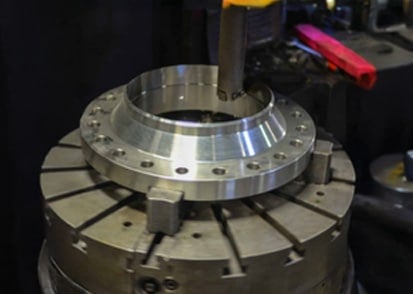
Understanding Blind Flanges: Function, Applications, and Selection Criteria
How to Specify a Blind Flange
Most people arrive here already knowing they need a blind. The questions that follow are the ones that decide whether the right one shows up: class, thickness, material, facing, and whether it needs a tap.
Why base thickness matters more on a blind
A weld neck or slip-on flange has a bore, so system pressure passes through it. A blind has no bore, so the full pressure load lands on the disc and tries to bow it outward from the center. At 600 psi across a 12 inch bore that load is roughly 68,000 pounds. ASME B16.5 sets a minimum base thickness for every size and class to resist it. On our dimension tables that is the T column, measured across the bolted base of the flange and not the raised face or hub. Lap joint flanges in Class 150 and 300 carry their own thicker TJ value, so read T for a blind.
The jump between classes is steep. From our own dimension tables, a 24 inch blind has a base thickness of 1.81 inches in Class 150, 2.69 inches in Class 300 and 4.00 inches in Class 600. A 12 inch Class 2500 blind runs 7.25 inches at the base. The full base thickness, outside diameter, bolt circle and bolt hole columns are on the Class 150, Class 300 and Class 600 tables, with the rest of the classes alongside them.
Never drop to a lower class blind than the flanges it bolts to. The bolt pattern will not line up, and if it did, the disc would be under-thickness for the pressure. If you need the thickness math behind the standard, our post on how to calculate blind flange thickness walks through it.
Pressure class and material
The pressure a blind flange holds is set by its class and material group, not by the blind itself. An A105 carbon steel blind falls in ASME B16.5 Material Group 1.1, rated 285 psig in Class 150, 740 psig in Class 300 and 1,480 psig in Class 600 at ambient temperature, with the rating stepping down as temperature climbs. Stainless and alloy grades sit in their own groups with their own tables.
Texas Flange keeps blind flanges in stock in A105 carbon steel, A350 LF2 for low temperature service, and F304L and F316L stainless. For grades F11, F22, F5, F9 and F91, duplex F51, F53 and F55, and nickel alloys, we quote per project. Send the service and temperature with the size and we will match the grade. Material pages: carbon steel, stainless steel, alloy.
Raised face, flat face or ring joint
A blind's facing has to match the flange it bolts to. Raised face (RF) is the default for steel-to-steel joints in process and oil and gas service. Ring type joint (RTJ) is for high pressure critical service and is required on API 6A and 6BX connections. Flat face (FF) is the waterworks standard under AWWA C207 and is the only correct choice against cast iron.
That last one is the mistake that costs money. Class 125 cast iron drilling matches Class 150 steel drilling in the common sizes, so a raised face steel blind will bolt right up to a cast iron pump or valve body. Under bolt load the raised face concentrates the force on the inner ring of the casting and can crack it. Against cast iron, specify a flat face blind and a full face gasket that extends past the bolt circle to the flange OD. RTJ blinds and ring gaskets are covered on our ring joint flanges page.
Tapped, reducing and high hub blinds
A plain blind is a solid disc, but it does not have to stay that way. The most common alteration is a center NPT tap, which turns the blind into an instrumentation flange: a 1/4 inch or 1/2 inch NPT for a gauge, vent or drain, or larger where flow matters. A blind can also be bored and drilled as a reducing flange to step a line down at a dead end, or drilled for a vent or restriction orifice.
High hub blinds carry an extended hub on the back face that stiffens the disc and spreads bolt load, which is why they show up on large diameter high pressure work and why most API 6BX blinds are furnished with one. Tapped, reducing and high hub configurations are quoted with the size, class, facing and material. See custom flanges for the range of alterations we supply.
Blind flange or spectacle blind
If a line will be isolated once and stay isolated, a blind flange is the right part. If the same joint will switch between flow and positive isolation during turnarounds, a spectacle blind (figure 8) or a paddle blank and spacer set is the better answer, because the hardware stays in the line and rotates or swaps rather than being removed. Those parts are governed by ASME B16.48, Line Blanks, not B16.5, and have to match the class and facing of the flanges they sit between. Dimensions are on the spectacle blind and line blank page and the full comparison is in our post on spectacle blinds, figure 8 blanks and line blinds.
Three things to check before you order
Weight. A blind is the heaviest flange in its size and class because there is no bore. Anything from about 12 inches up in Class 300 or higher is a rigging job, not a two hand carry. Plan for it at the receiving dock, not when the truck is idling.
Bolting. A blind takes the same bolt count and diameter as the mating flange. Confirm both on the ASME B16.5 bolt and stud chart before ordering studs.
Drawings. Every standard size and class is modeled in our CAD and 3D flange drawing library, including RF, FF and RTJ blinds, for checking fit before the part ships.
For pricing, send size, class, facing and material to sales@texasflange.com or call 281-484-8325.