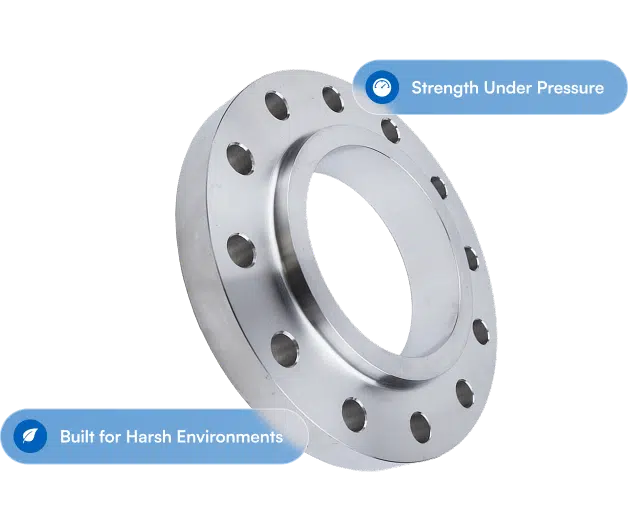
If you work in piping, valves, and fittings long enough, somebody is going to ask you which standard is “the strictest.” It is a fair question, considering what your project needs might be. Between ASME, API, ANSI, ISO, PED, and AWWA, there are enough acronyms to fill a spec sheet and enough overlap to make your head spin. But the real answer is not as simple as picking a winner, because each standard governs different things, and “strict” depends on what you are measuring. When discussing standards for flanges, it is essential to consider PED certified flanges to ensure compliance with EU regulations.
That said, one standard does not get nearly enough attention on this side of the Atlantic: the EU Pressure Equipment Directive, better known as PED. If you are selling, specifying, or purchasing flanges for projects with any European Union governance involvement, PED is not optional. It is the law.
Understanding the importance of using PED certified flanges can significantly impact the safety and quality of your projects.
When discussing standards for flanges, it is essential to consider PED certified flanges to ensure compliance with EU regulations.
What Is the Pressure Equipment Directive (PED)?
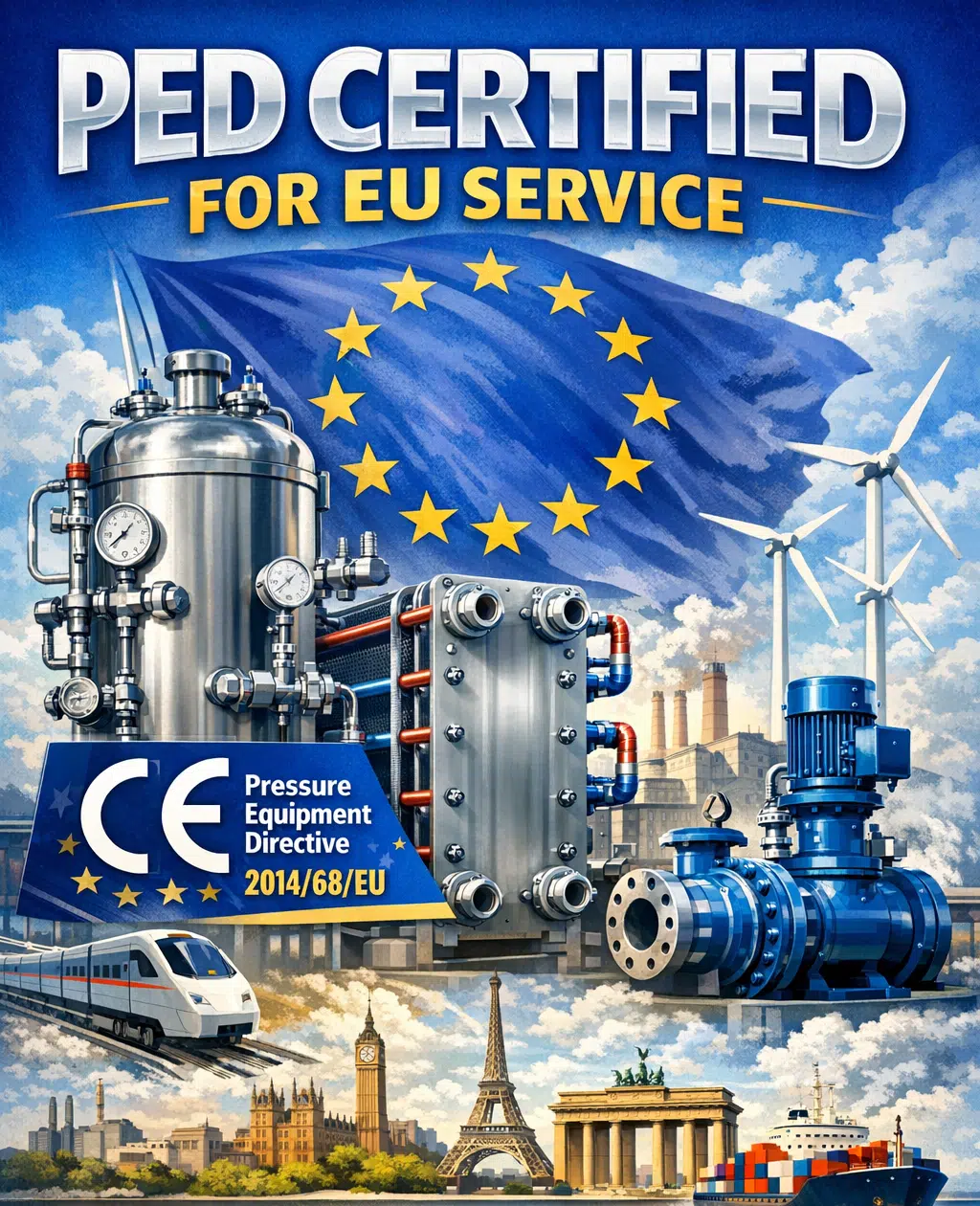
The Pressure Equipment Directive (2014/68/EU) is a European Union legislative directive that establishes the legal requirements for the design, manufacture, and conformity assessment of pressure equipment and assemblies with a maximum allowable pressure greater than 0.5 bar. That includes pipe flanges, fittings, valves, pressure vessels, and piping assemblies.
Unlike ASME or API, which are voluntary consensus standards developed by industry organizations, PED is a regulatory mandate. Some projects with pipeline fittings might be structural or even for personal use, but if your product enters the EU market for pressure vessel or pipeline work and falls within its regulatory scope, compliance is not a suggestion. It is a legal prerequisite for placing the product on the market. The product must bear the CE type marking, which signals conformity with all applicable EU directives.
PED is enforced through a system of conformity assessment modules, which range from internal production control (Module A) for lower-risk equipment to full quality assurance with design examination by a Notified Body (Module H1) for the highest-risk categories. The level of third-party oversight scales directly with the hazard potential of the equipment.
PED Risk Categories: How Flanges Get Classified
One of the things that sets PED apart is its risk-based classification system. Pressure equipment is sorted into four categories (I through IV) based on a combination of factors: the type of fluid or gas (Group 1 for hazardous, Group 2 for non-hazardous), the maximum allowable pressure (PS), and the volume or nominal size (DN) of the equipment.
For pipe flanges specifically, classification typically depends on the nominal size and pressure of the assembly they are part of, along with the fluid group. A 2″ Class 150 flange in water service falls into a very different risk category than a 24″ Class 1500 flange in hydrogen service. The higher the category, the more involvement a Notified Body has in the conformity assessment process.
Here are some details on how the categories break down in practice:
[TABLE]
The critical takeaway: for Category III and IV equipment, a Notified Body must be involved in both the design review and the production oversight. This is a level of mandatory third-party intervention that ASME and API do not impose as a blanket regulatory requirement for all pressure vessel jobs, though ASME does involve Authorized Inspectors for code-stamped pressure vessels on most applications.
How PED Compares to ASME, API, and ISO
The comparison is not apples-to-apples, because these standards serve different functions. Here is the clearest way to think about it:
ASME is the technical heavyweight. ASME B16.5, B16.47, B31.3, and the Boiler and Pressure Vessel Code (BPVC) set the most detailed requirements for pressure design calculations, material traceability, NDE (nondestructive examination), and hydrostatic testing. When it comes to the engineering rigor of “how thick does this flange need to be and how do you prove it,” ASME is the global benchmark. Many PED-compliant products actually reference ASME and DIN material and design standards as harmonized standards to demonstrate conformity with PED’s Essential Safety Requirements.
API adds industry-specific layers. API 605, API 6A, and related standards cover applications that ASME does not address as specifically, particularly in upstream oil and gas. Fugitive emissions testing per API 624, fire-safe design per API 607, and sour service requirements per NACE MR0175/ISO 15156 are areas where API can go into detail beyond ASME. For refinery and wellhead applications, API requirements often stack on top of ASME as they complement each other.
ISO provides the international baseline. ISO 9001 (for pipeline fittings) and ISO 15156 (sour service) are widely referenced, but ISO standards tend to be less prescriptive than their ASME or API counterparts. ISO is important for projects that need a globally recognized reference standard, but in practice, U.S. and EU projects almost always invoke ASME or EN standards for the actual technical requirements with some overlap.
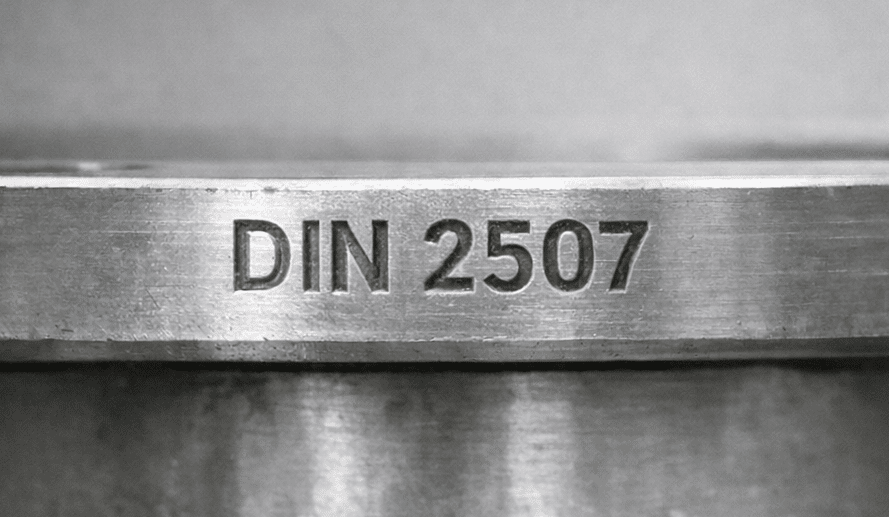
PED is the legal enforcer. PED does not write its own flange dimensions or material specs. Instead, it sets Essential Safety Requirements (ESRs) and allows manufacturers to demonstrate compliance through harmonized European Norms (EN 1092 for flanges, for example) or through other technical standards like ASME, provided they meet the ESRs. What PED adds that no other standard does is a mandatory, legally binding conformity assessment process with Notified Body involvement for higher-risk equipment. Non-compliance is not a spec deviation; it is a market access violation.
Why PED Matters for U.S. Buyers and Sellers
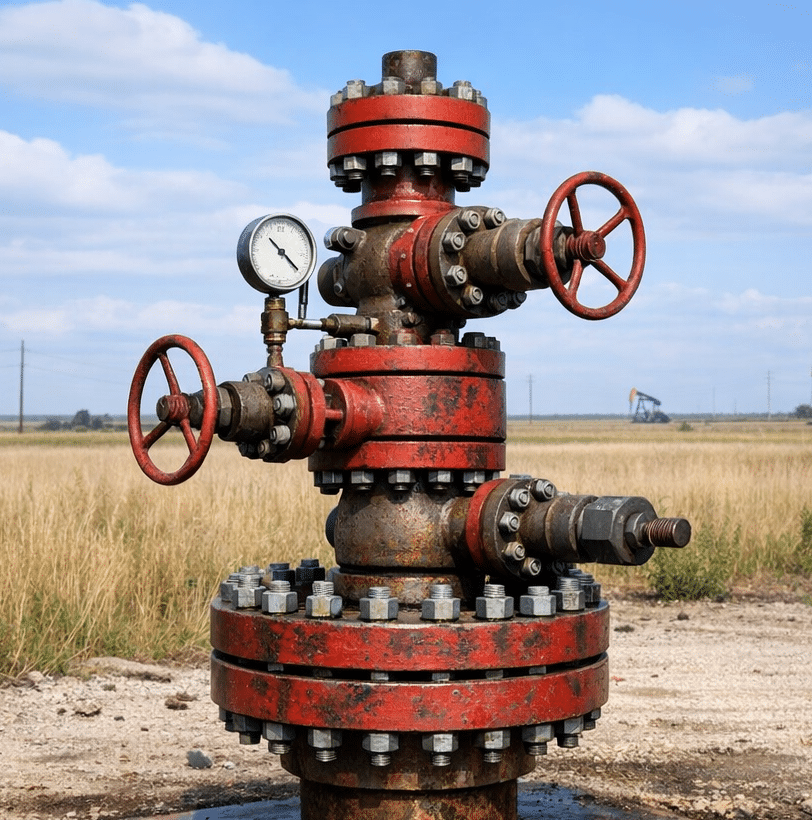
If your project has any EU nexus, whether it is an LNG terminal in Europe, a refinery expansion with EU-based partners, or simply a procurement spec that calls for CE marking, PED certification is a requirement. That means your flanges need to come with a Declaration of Conformity (DoC), appropriate CE marking, and supporting documentation from a recognized Notified Body if the category requires it.
At Texas Flange, we handle PED-certified flanges on a case-by-case basis and can provide material with the documentation to support your project requirements. If you are quoting a job that requires PED compliance, CE marking, or EN 10204 3.2 inspection certificates, we can confirm availability and certification status at time of material quotation.
The Bottom Line
There is no single “strictest” standard across the board. ASME is the most technically rigorous for pressure integrity and base engineering design for flanges. API is the most demanding for specific high-risk applications like fire-safe and fugitive emissions for onshore and offshore applications. PED stands alone as the only one that carries the force of law beyond the governing body responsible for the PVF design, with a mandatory risk-based classification system and required third-party oversight that the voluntary U.S. standards do not necessarily impose at the regulatory level.
If you need flanges that meet PED, ASME, API, or any combination of the above, call Texas Flange today. We will confirm what is available, what certifications we can provide, and what lead times look like.
Related reading: For the current 2026 picture on tariffs, domestic content thresholds, and how they affect compliant projects, see our 2026 tariffs and domestic content update.